GAS ERA
Iron posts, open flames
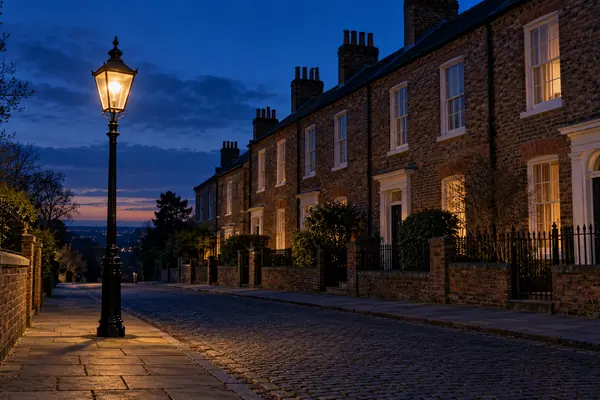
Gas street lighting began on Pall Mall in June 1807. With urban gas works in the 1840s, cast-iron lamp posts spread across London in the mid-19th century.
Date a lamp post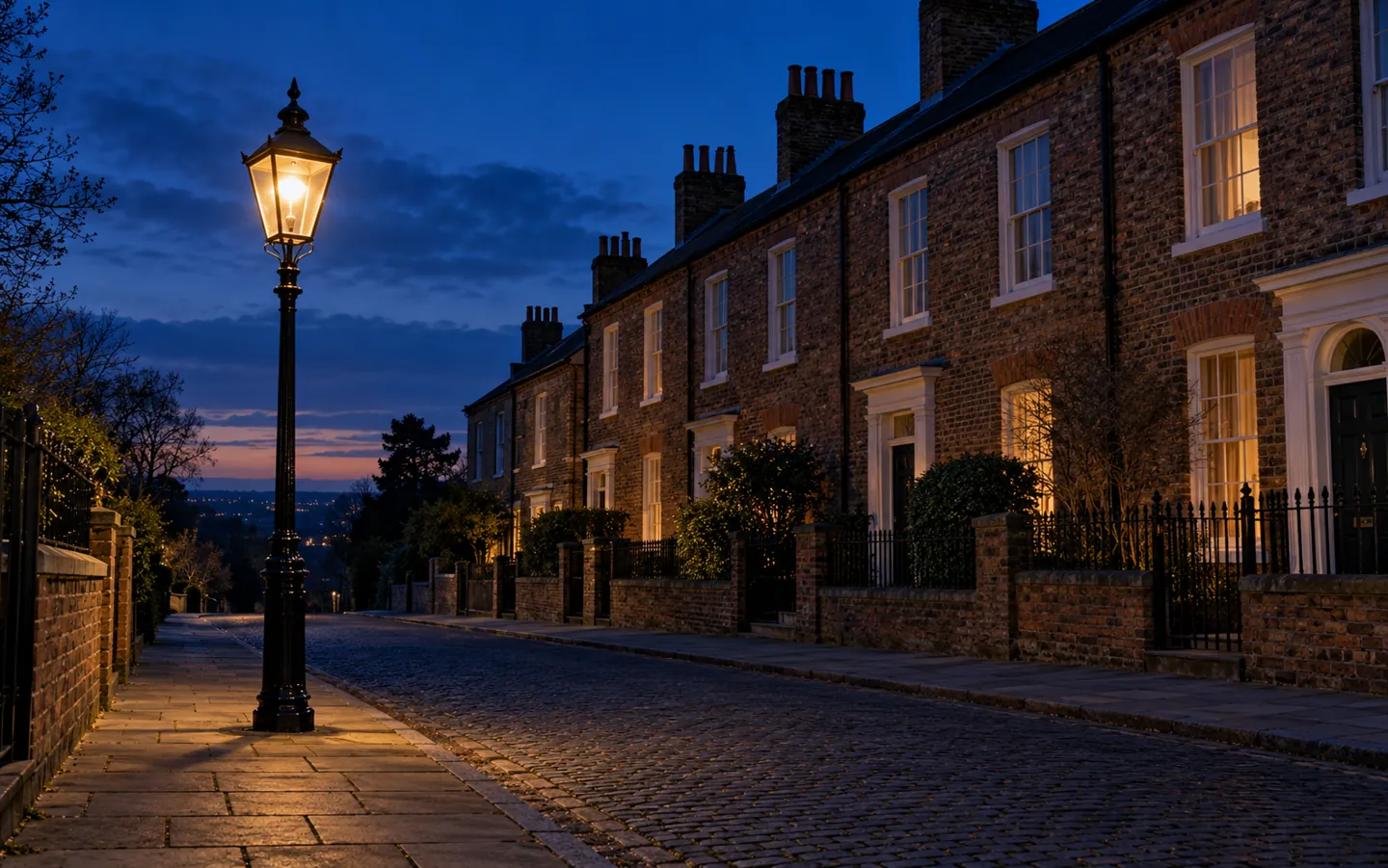
STREET FURNITURE, READ CLOSELY
1807 gas lights on Pall Mall
AI-generated image, not a photograph of a real person or place.
Street lights follow fashions, just like front doors and railings.
Gas lamps arrived in London in 1807, lanterns were restyled as burners improved, and many councils have since swapped orange sodium lights for white LEDs. The clues to each era are often still on the post.
THE SHORT ANSWER
Each new light source brought a new kind of post or lantern,
and old ones were often upgraded rather than removed.
GAS ERA
Gas street lighting began on Pall Mall in June 1807. With urban gas works in the 1840s, cast-iron lamp posts spread across London in the mid-19th century.
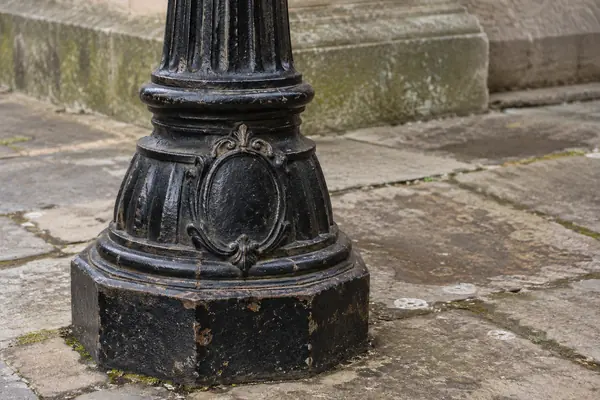
Date a lamp postTHE BASE
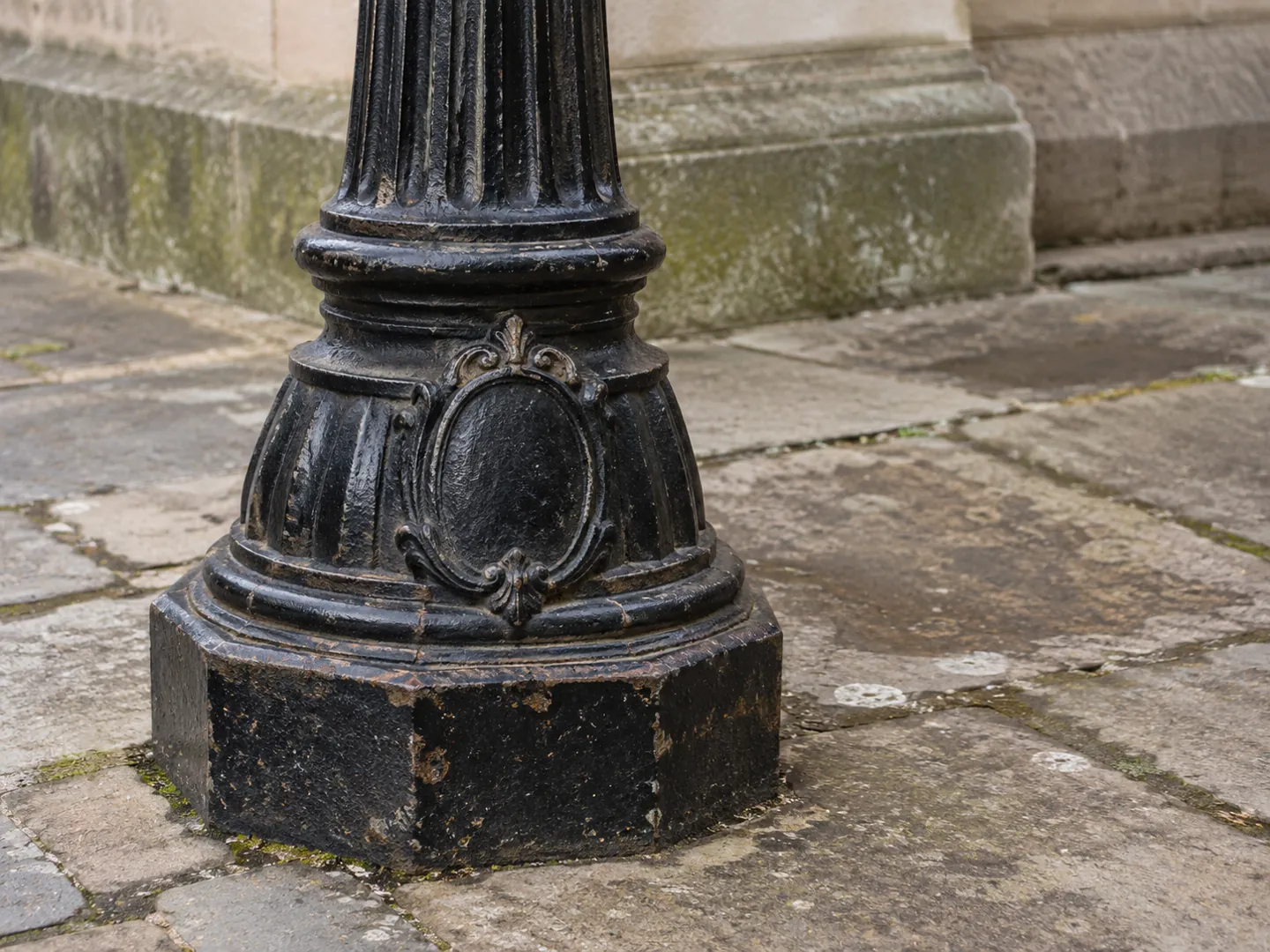
Some columns carry their history: a Covent Garden post bears the royal cypher G V R and the date 1910, and an 1880s Pimlico lamp carries its maker's name and a serial number.
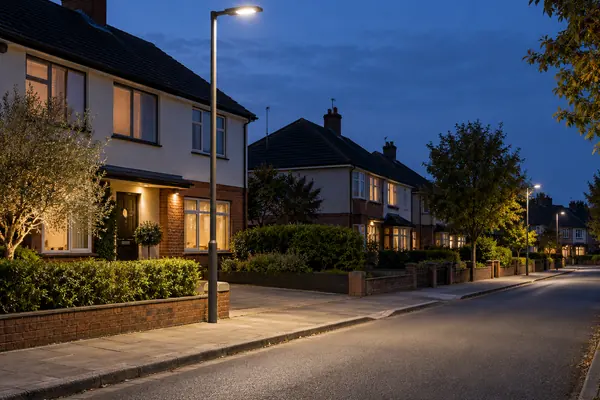
How to read oneTODAY
In Inverclyde, non-white lanterns such as sodium fell from 6,642 to 883 between 2015/16 and September 2018 as white LED lanterns replaced them.
See the numbers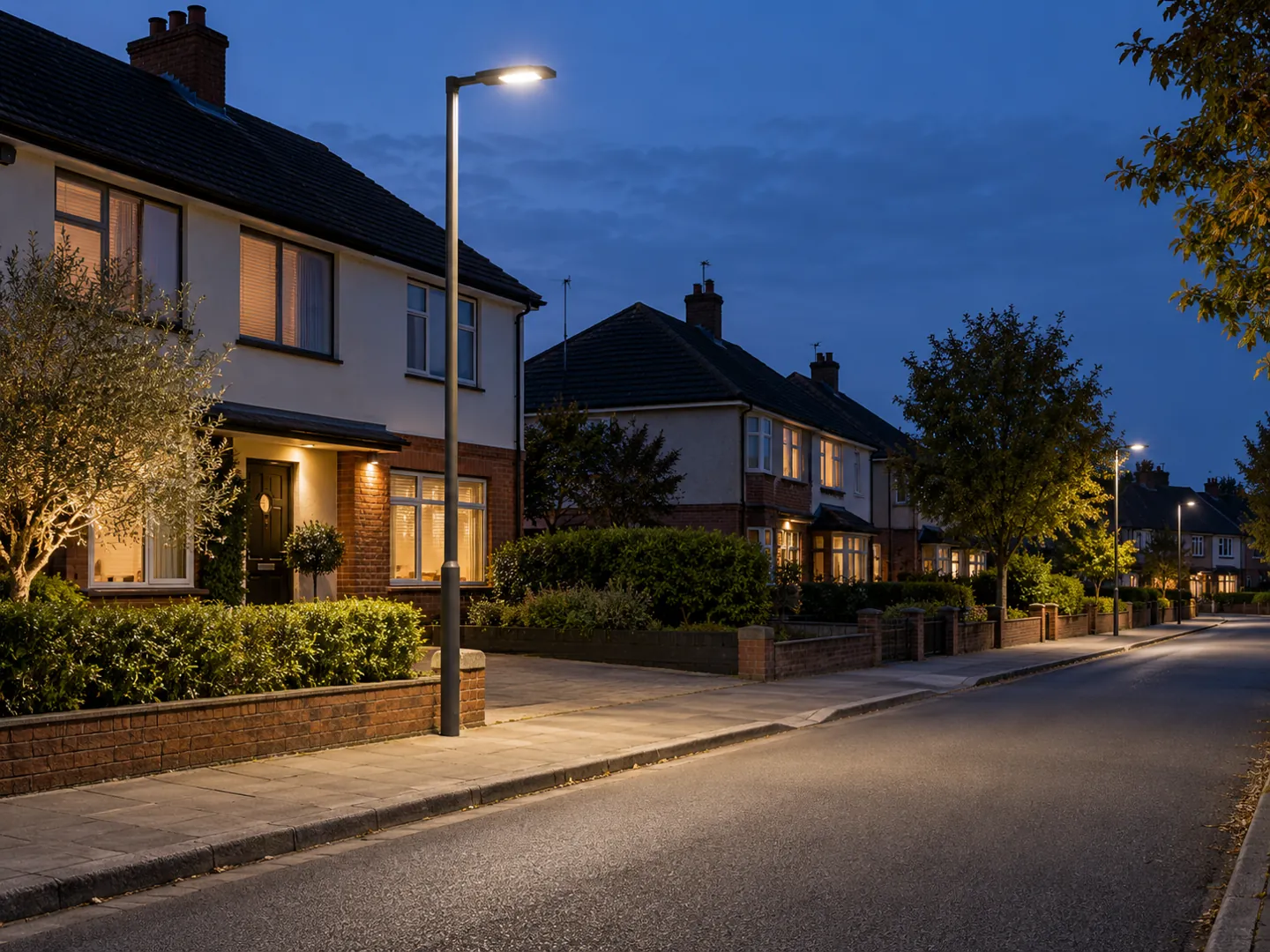
ON YOUR OWN STREET
The listing descriptions for old London lamps show where the clues sit. The same habits work on any street.
Look for raised crests, dates, cyphers, a maker's name or a serial number. An 1880s Pimlico lamp still carries its maker's mark and the number 6199.
Note its section and decoration: one listed post has an octagonal, tapered shaft with laurel ornament; a 1910 column is tapering and fluted.
Ladder stands, swan-neck brackets and the lantern's shape all hint at age. Many gas lamps got new 'shadowless' lanterns in the 1920s and 1930s.
A flame or mantle, an old sodium lantern, or a flat white LED head tells you which upgrades a post has been through.
TWO NUMBERS WORTH KNOWING
One figure from a city keeping its gas lamps,
one from a council that switched to LED.
138 listed lamps
Grade II listed gas lamps staying on gas
In 2022 Westminster halted the conversion of 174 gas lamps, 138 of them listed. Around 300 of its 14,000 streetlights were gas powered.
KEPT · WESTMINSTER
51% of before
Electricity use after the LED programme
By September 2018, consumption and carbon footprint had fallen to 51% of the 2013/14 level as lanterns were converted to white LED.
SWITCHED · INVERCLYDE
Westminster figures as reported by ianVisits (22 November 2022) from the council's decision; Inverclyde figures from the council's January 2019 committee report.
DATE A LAMP POST
Pick a feature you can see on a street light. The bar shows roughly how far back that style goes, from the gas age to today's LED heads.
Summarised from Historic England list entries for London gas lamps and an Inverclyde Council street-lighting report. Features vary from place to place.
WHY SOME ARE LISTED
Historic England's reasons for listing an 1880s Pimlico gas lamp note that gas lamps were once a common sight, but original examples are increasingly rare. It also valued surviving original features such as the twin ladder stands and the maker's mark.
Not every heritage-looking light is old, or gas. Westminster said 94 unlisted gas lamps would become LED lights with replica mantles, piping and clocks, made to copy the soft 'honey' glow of gas.
In conversation
Historic England's list entries say gas street lighting first appeared in London on Pall Mall, with a public demonstration in June 1807.
Electric street lighting was introduced from the 1880s. Gas fought back with the incandescent mantle in 1896 and the inverted mantle in 1905.
Many Westminster gas lamp posts were upgraded in the 1920s and 1930s with new 'shadowless' lanterns, so a 1910 column can carry a lantern from around 1930.
Yes. Westminster decided in 2022 to keep 174 gas lamps, including 138 Grade II listed ones, burning gas.
In Inverclyde, low and high pressure sodium lanterns have been replaced with high-efficiency white LED lanterns under a programme approved in 2015.
Each figure on this page comes from the sources below.
ABOUT THIS NAME
streetlightfashion.com is part of the DoodleSale portfolio. It isn't in an auction right now, but you can ask about leasing it.